Three Things Tablas Creek Does Differently
A tractor heads down a vineyard row on a hill at the organic Tablas Creek winery.
I step off the bus and the land smells sweet. I’m at the Tablas Creek winery in the Paso Robles AVA, California, a winery that has been certified organic for over twenty years and which, at 270 acres, is sizeable. It’s Spring and land always smells better at this time of year. But I’ve been to a number of vineyards in the previous few days and none of them smelled like this. From the outset: Tablas smelled and felt special.
The good smell of the land turned out to be a portent. The wines at Tablas Creek are outstanding but what this business is doing to reduce is its carbon footprint, to be a good corporate citizen and to reduce waste in general is extraordinary. If you want an example of a modern-but-great winery that is striving at every step to be better and more sustainable, Tablas Creek is it.
"We started out in a warm area that has only gotten warmer,” Tablas Creek Director of Winemaking Chelsea Franchi says, “so we really need to concentrate on how to farm thoughtfully. The better we farm the more sustainable our business will be. We don’t think of our property as just a vineyard. We are not a monoculture.”
I was at Tablas Creek as part of a press tour built around the theme of “sustainability”. What became clear was that sustainability is not just good for the land; it’s often good for the bottom line, and just plain good for business. Tablas Creek doesn’t use herbicides or pesticides, it has its own flock of sheep (to keep grass under control), it runs alpacas and uses Spanish mastiff to ward off predators. It moves its various sheep and alpaca herds every one to two days to avoid over grazing. But its organic and land-management regime is but the start.
Here are three of its initiatives.
A small selection of the sheep and alpaca at the Tablas Creek winery in Paso Robles.
The Freight-Saving Train
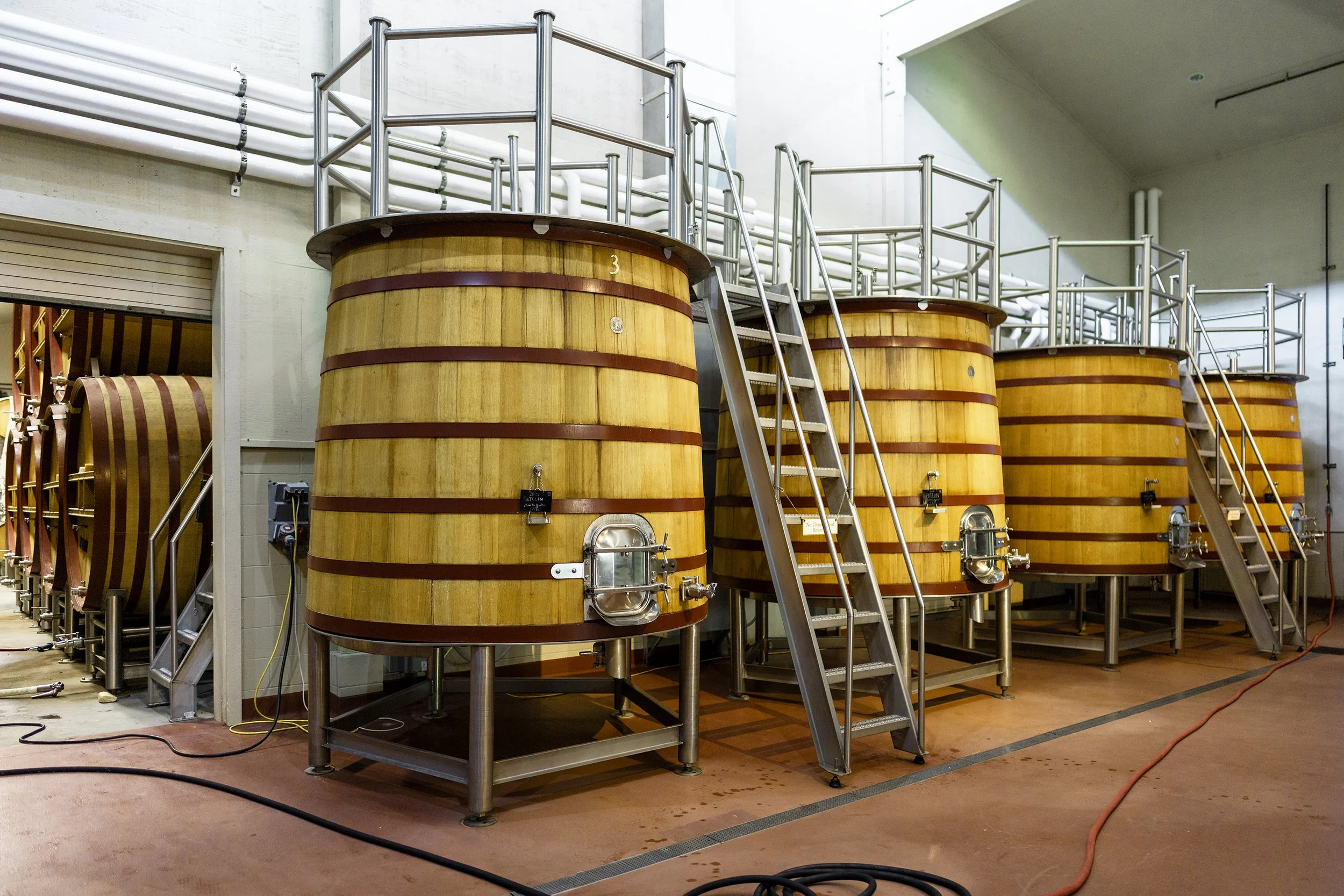
Given that most wine is freighted away from the winery, the weight of each bottle is a massive contributor to a winery’s carbon footprint. Tablas Creek (almost) halved the weight of the bottles that it uses, from 893 grams to 467 grams, as a first step. More recently it has reduced the weight of its bottles again, down to 400 grams per bottle.
“It’s interesting,” Franchi says. “When we switched from the old glass to the new glass, you're so accustomed to picking up those really heavy case boxes and all of a sudden the new case boxes feel so light; they make you feel like a superhero. The older I get the lighter our glass gets – which is, like, a perfect graph.
“This (change) is great in every possible facet. It's so much cheaper for us to ship a lighter product. Shipping is our most expensive cost here, after payroll. In 2022, we spent nearly US$1.4 million in shipping costs.
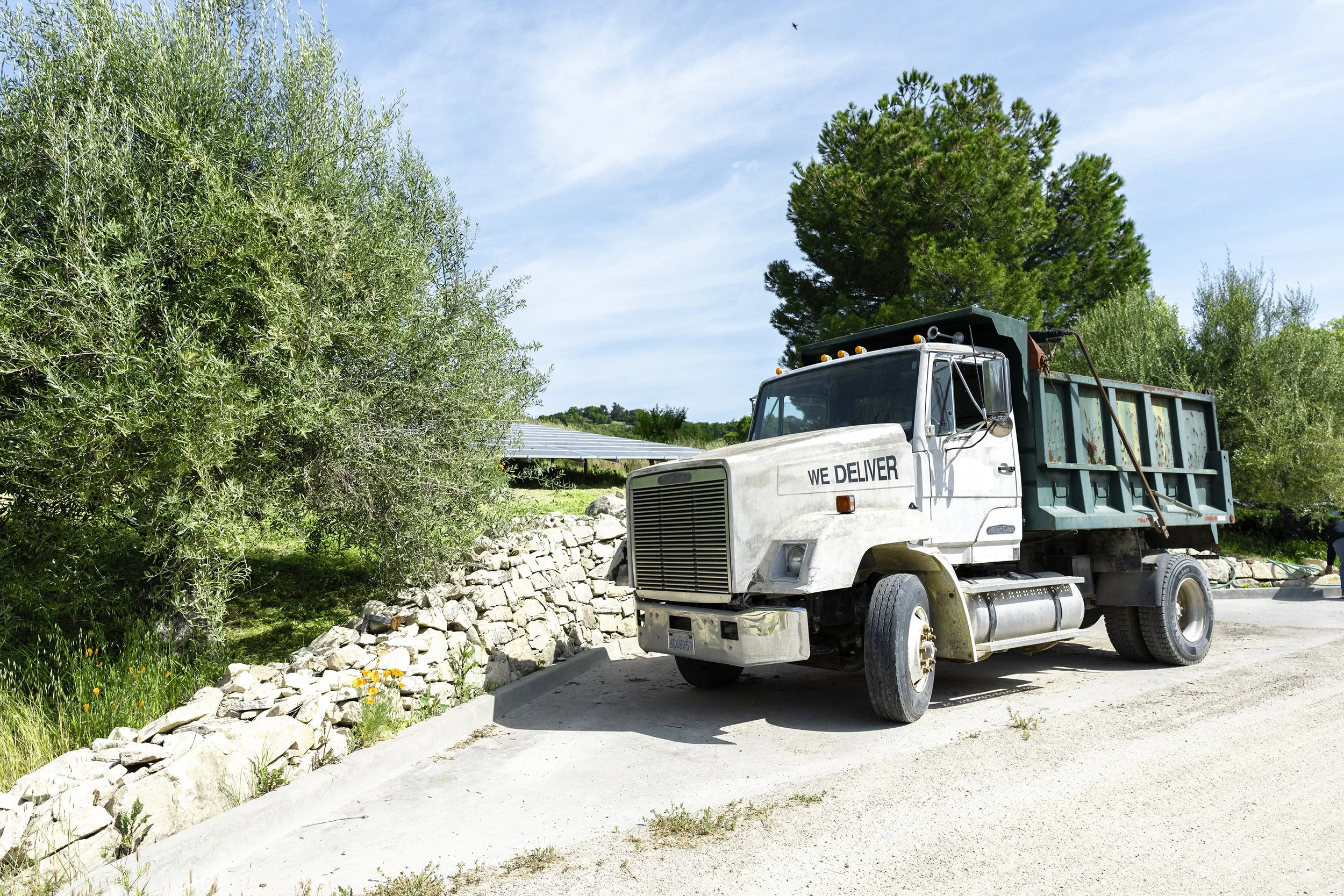
By lightweighting this glass we saved an immense amount of money. With our old bottle, we were only able to fit 19 pallets (there are 56 dozen bottles in a pallet) on a semi truck before we hit the legal weight limit. With our new glass, we're able to fill it at 22 pallets. So all of a sudden you start adding up, all these truckloads of savings – both financial, and in carbon emissions.
“This is the direction that we want to go, for ecological reasons. But there are huge costing advantages here too.”
The Bag-in-Box Revolution
Tablas Creek has had genuine success with the introduction of bag-in-box casks – which, too, has significant shipping/carbon emission savings.
While I’m at the winery I taste the Tablas Creek Vineyard Patelin de Tablas Rosé 2024, served from cask. I reviewed it here (spoiler: 94 points). This cask of rosé comes in a 3-litre pack, and costs US$95. So it’s premium (and excellent) wine, going into bag-in-box. Three litres is the equivalent of four bottles of great rose.
Here’s the weight saving on this simple switch. The bag-in-box weighs 3.7kg. The equivalent in bottled wine weighs 5kg. The first test run of this bag-in-box rosé (which was only 350, 3-litre boxes) sold out in three hours. Production of bag-in-box rosé has increased every year since. Tablas Creek also now produces a bag-in-box grenache, off estate-grown, organic-grown vineyards. It sold out quickly too because, in Franchi’s words, “who doesn't want a chillable grenache!”
The Keg Leg of the Business
Tablas Creek now serves its wines, at the cellar door, from keg rather than from bottles (whenever it can), to minimise wastage.
This might not sound like a huge deal. But it is. The Tablas Creek winery is a popular destination but traffic to all tasting rooms is inconsistent and wine is perishable. There are “gassing” systems to help preserve opened-bottles for longer but an even better solution – which almost no one else does – both financially and ecologically is to specifically ‘keg’ wines and to then serve them on tap.
“In 2025, we went through 303 kegs,” Franchi says. “In total, we've kegged 1700 cases worth since starting with this program in 2023.”
What has this saved? “So over the last three years we've eliminated 1700 cases worth of dry goods that would have just gone directly into the trash.
Franchi: “It’s saving us money, the wine is wonderfully fresh when served from keg, we have less wine waste, our customers love it, we love it.”
Tablas Creek Director of Winemaking Chelsea Franchi shows the wine keg system at the Tablas Creek tasting room.
Pencil pine trees at the top of a hill at the Tablas Creek vineyard in Paso Robles. Note the goblet (bush) vines and absence of herbicides.
See also [How Sustainable is Californian wine?]
See also [Tablas Creek Reviews]