Bindi
Bindi is a Mattinson 10-Star Winery.
Only the best of Australia’s best wineries are ranked as a Mattinson 10-Star Winery.
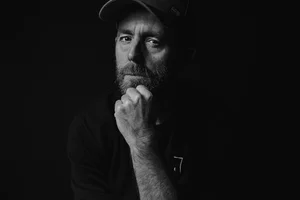
When you stand at the front door of the winery at Bindi, the main or original vineyard is there in front of you, sloping downwards. That’s the magic, that’s the drama, that in effect is the making of the legend. But if you turn to your left, and walk across the open grassed fields, and explore the Bindi property away from that glorious vineyard, you see a side of Bindi that is both its hinterland and its soul. Bindi is more than a vineyard, it is a place. The property is 170 hectares in size but is planted with but seven hectares of vines. It’s indigenous grassland. It’s bushland. It’s stands of thick-planted blue gums. Winemaker and custodian of the Bindi property Michael Dhillon could barely be more obsessed or involved or intimate with the vines he grows. But watching him walk the non-vine areas of the Bindi property is like watching a dog run out onto a beach. He’s alive to the bigness of it, the beauty of it, and the detail of it. This rapture for the place of Bindi grows itself straight into the wines.
If you moved Bindi 100 metres, I once wrote, to the left or to the right, geographically, the wines would taste different, or at least that’s the impression the wines create. I probably should have said fifty metres, or five. The soils are cut with quartz, the vines are grown organically, the sections are deliberate, the climate is cold. We’re at Gisborne, in the Macedon Region, at 500 metres above sea level, where in winter the rocks feel like ice. Every vine at Bindi is important, none more so than the Original pinot noir vineyard and the Quartz vineyard, both of which were planted nearly forty years ago (1988). But there are important ‘new’ plantings too of pinot noir, called Block 8 and Darshan, both of which blocks are now over a decade old, both of which are planted at a density of 11,300 vines per hectare, and both of which grow spectacular wine. The Darshan vineyard incudes a patch planted at 22,000 vines per hectare. Nothing here is done fast, without deep thought, or by halves.
If you were looking for the quickest route to winemaking victory, whatever that might look like, you’d never take Bindi as your model. If you were looking to build en enduring masterpiece of wine growing, wine nurturing and wine business, then you’re best advised to ask yourself, every day of every decade: what would Bindi do? Bindi is greatness for the long haul. It’s Pinot Noir and Chardonnay of perspective and vision. It’s big pictures in tiny movements. It’s what elite looks like.
—
Bindi is the Bindi property. It is all Chardonnay and Pinot Noir, sectioned into blocks. There are also wines made by Bindi from non-estate grapes, which include shiraz. The estate wines go without saying, as a rule. The non-estate wines are always worth investigating, and never let the Bindi name down.
—
There are 51 Bindi wine reviews on The Winefront site 2004–2024.
Bindi is a Mattinson 10-Star Winery – the highest honour awarded by Australian wine critic Campbell Mattinson. 10-Star status recognises one thing: the quality of the wine in the glass, every glass, across the range. The full list of 10-Star Wineries constitutes Australia's Best Wineries.