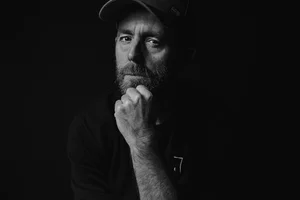
Julian Grounds
This image was taken on the Sony A1, which is a charmless camera that leaves me completely cold, but which is a startlingly brilliant performer. It’s a camera that has a lot in common with much of modern wine, you could say. This image was taken at the (architecturally-significant) Stonier winery, with the door opened to let in side-light, on a Sony 85mm lens, shot at f1.4, which is a great lens but was too tight for this situation – I had to disappear into the barrels to get enough perspective/distance, which was the same problem that I had when trying to capture Tim Shand. With Tim I had to become part of the wall. For this image I drove two hours to the winery, spent a couple of hours on site, drove two hours back, and then spent three days writing it up and processing the images. It was effectively a full week of work. All for the love it; for no pay.
But I do love it. And so, like the storied boats, we beat on.
—
I don’t personally love these images, though the light is beautiful. Julian is a highly worthy subject too of course. When I first looked at the scene before me I thought that good images were going to be unlikely, if not impossible. So in that context I’m happy that they came out ok, and that they look professional-enough. There’s a debate in some photography circles as to whether you should let your subjects keep their wrist-watch on; some people argue that the resultant images can start to look like an advertisement for a watch, rather than as a portrait. The watch can be distracting. But given that it’s a sporty watch and that Julian Grounds himself is sporty, in this case I think that it’s part of the portrait rather than separate from it.