The Most Beautiful Tart in Town
A single pastel de nata Portuguese tart sits on a blue plate, on a blue table, at the Bartolo cafe, upstairs at the Central Market in Kuala Lumpur. PHOTO: Campbell Mattinson.
One hot afternoon in Kuala Lumpur I walked into a cafe in a tourism area and bought what I thought was a Portuguese Tart. It was a Portuguese Tart. I love a good Portuguese Tart and buy and say yes to them whenever I can – which is nowhere near as often as I'd like. Most of the time a Portuguese Tart is served cold, or warmed, or if you're really lucky, still warm from the oven. Always, the custard element is set, even when warmed. I am not an expert on the Portuguese Tart. This is just my experience.
Here's where things get interesting.
The Portuguese Tart that I was served at this Kuala Lumpur cafe had been warmed. There was a window to the kitchen, or at least to a tart-making area, where these tarts were actively being made. So whatever I was about to eat, had been made on site. But these recently-made tarts had then been displayed in a cabinet near the front of the shop, where presumably they cooled. The cafe was not overly busy when I visited; most of the tables were empty. There are clues in the above but, even so, I was unprepared for what came next. Because, when I ordered one, ten things happened.
The manager of the shop said: you will want more than one.
I'd already had lunch, so I declined the offer of ordering more.
The Portuguese Tarts were actually labelled Pastel de Nata.
I bit into one, and the custard was not set. It ran. My beard, suddenly, was a thunderstorm of custard.
The custard was gooey!
It ran straight into my brain and set off a detonation.
If I'm not mistaken, the custard carried a hint of lemon. Just a hint.
Involuntarily, suddenly, stumbling, I ran back to the counter, screaming, HERE'S MY WALLET, TAKE AS MUCH AS YOU WANT, JUST PLEASE, I BEG YOU, GIVE ME MORE OF YOUR PASTEL DE NATA.
Instantly, I was, hopelessly, tragically, a Pastel de Nata addict. In fact, more: in a blink, I had fallen in love with the most beautiful tart in town.
In this hopeless, tragic whirl – so suddenly stranded on this glorious, delectable, most intense of Pastel de Nata shores – how had I even gotten here? – how was it – that a Portuguese Tart in an inauspicious, upstairs cafe in Kuala Lumpur – of all the cafes in all the world – could be so ridiculously good?
In the most modern of ways then, as I scrambled – on the floor – for my phone, I turned to Ai for an answer. Or to Claude, to be precise. Claude said: “Your KL cafe isn't doing something exotic; it is doing something original.”
I almost teared up.
Claude also said – well, it said quite a lot – that this tart was, by my complete accident, “the Malacca-to-Macau-to-KL arc landing in one room.”
I did tear up.
One of the more remarkable things about food, and at times about wine, is the way it brings history to your table, and serves it fresh. It’s not just food, it’s a world of war and conquest and ambition and love. At its best, often, it’s frugality, served brilliant. You take a spoonful, you’re rocked, it’s the flavour, you don’t even know what’s going on, but it’s centuries of accidents and moments and liaisons and lusts forming into a wrecking ball of deliciousness. All this, in this instance, had zeroed down into a single yellow tart, on a blue plate, at an open-air cafe above Kuala Lumpur’s bustling, historic, revitalised Central Market.
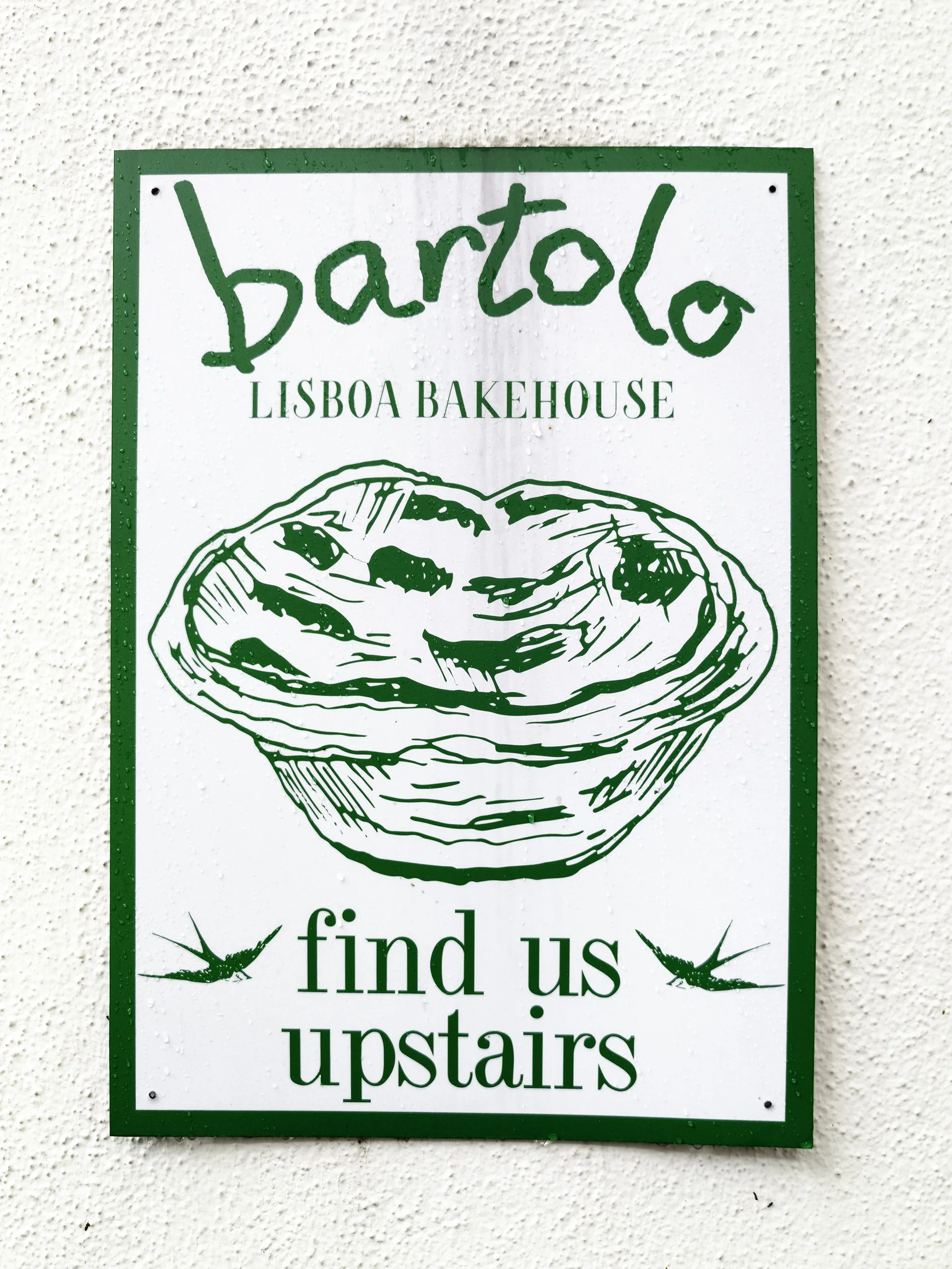
The cafe’s name: Bartolo: A Lisboa Bakehouse.
Food is a such weapon of privilege. It has a hierarchy that, in many instances, makes no sense. This ingredient is prized; this other one is not. It’s also, often, an inadvertent celebration of colonisation. In some ways I am guilty of the latter here but, importantly, the Bartolo bakehouse is re-making history for itself. To paraphrase Bono of U2 fame: the Portuguese stole Malaysia from Malaysians. The Bartolo bakehouse is stealing it back.
And it’s doing it for RM 8 per tart. Or in Australian dollar terms: this revolution costs $2.50 a pop.
Life, like Bartolo’s Pastel de Nata itself, is a mille-feuille. It’s sad and it’s sweet and I didn’t know it complete, but I took one bite, and I wanted to.
Claude: “Portugal took Malacca in 1511 – Afonso de Albuquerque, on his way to locking up the spice trade – and held it until the Dutch took it in 1641. A hundred and thirty years was enough to leave a permanent deposit: the Kristang community, of mixed Portuguese-Malay descent, still lives in the Portuguese Settlement in Malacca, still speaks a Portuguese creole, still cooks dishes like debal (devil's curry). So a Portuguese tart in Malaysia isn't a random transplant; the country has been quietly Portuguese around the edges for five centuries.”
That’s some layer. But there’s a more modern one: “The Macau egg tart became a craze that swept Hong Kong, Taiwan and Southeast Asia through the 1990s.” A version of it was even licensed to KFC, which is why KFC across Asia – still – sells "Portuguese egg tarts" to this day.
And so here we are, in 2026, on a hot Wednesday afternoon, a sweaty white tourist with blistered custard caked in his beard. I’m the kind of tourist who is known to fret and worry, over whatever, whenever, all the time. Suddenly though, I’m not that. The Bartolo bakehouse only opened in 2023. It’s run by cousins David and Mariana, whose surname I think is Da Silva. They are both Portuguese-born. They’re not making Macau egg tarts. They’re linked to the Portuguese-Malays in their own way, and to the heritage of real-deal Portuguese egg tarts, as made on the waterfront at Lisbon itself.
Linked, but more than that. This, in the crazy heart of modern Kuala Lumpur, is two cousins from Lisbon who decided to set up shop, run weekly music and poetry events, and bake their grandmother's recipes. They cold-proof the pastry for eight hours. They cook super hot. The top blisters. The shatter of sugar and egg yolk and cinnamon and lemon, cased in a thousand layers of history and pastry, hits you straight up, and clarifies you from the inside out.
I wasn’t staying nearby; I was on the other side of town. KL now is thick with car traffic. It wasn’t convenient to return, and I was short for time. But early the next morning, I did return. In fact I thought about these tarts – the most beautiful tarts in town – all night, as if I really was hooked, and it really was love. The second time around, even having slept on it all, it was love all over again.
FAQ: Bartolo, and the Pastel de Nata itself
What exactly is a Pastel de Nata?
It’s a small Portuguese custard tart – laminated pastry, baked ferociously hot, filled with an egg-yolk custard, the latter scented with lemon and cinnamon. These tarts were originally born at the Jerónimos Monastery in Lisbon's Belém district; when Portugal shut its monasteries in the 1830s, the monks' recipe passed to a nearby shop, Pastéis de Belém, which opened in 1837. This shop calls its tarts pastéis de Belém. Everyone else makes pastel de nata.
Is a Pastel de Nata the same as a Portuguese Tart?
Yes. Same tart, two names. The cold, firmly set version though is the modern compromise. In Lisbon they're eaten warm, near the oven, custard soft to the point of running. Which brings me to Bartolo.
Should the custard run?
At its best, yes, or at least, close to it. The phrase that is often used is “trembling in the middle”. The tart I ate at Bartolo ran, gloriously.
What about the burnt-looking top?
It looks burnt but more accurately: it’s blistered. The dark freckles come from sugar caramelising in a super-hot oven. If it’s not dark and blistered then it wasn’t made in a proper pastel de nata oven.
Who or what is Bartolo?
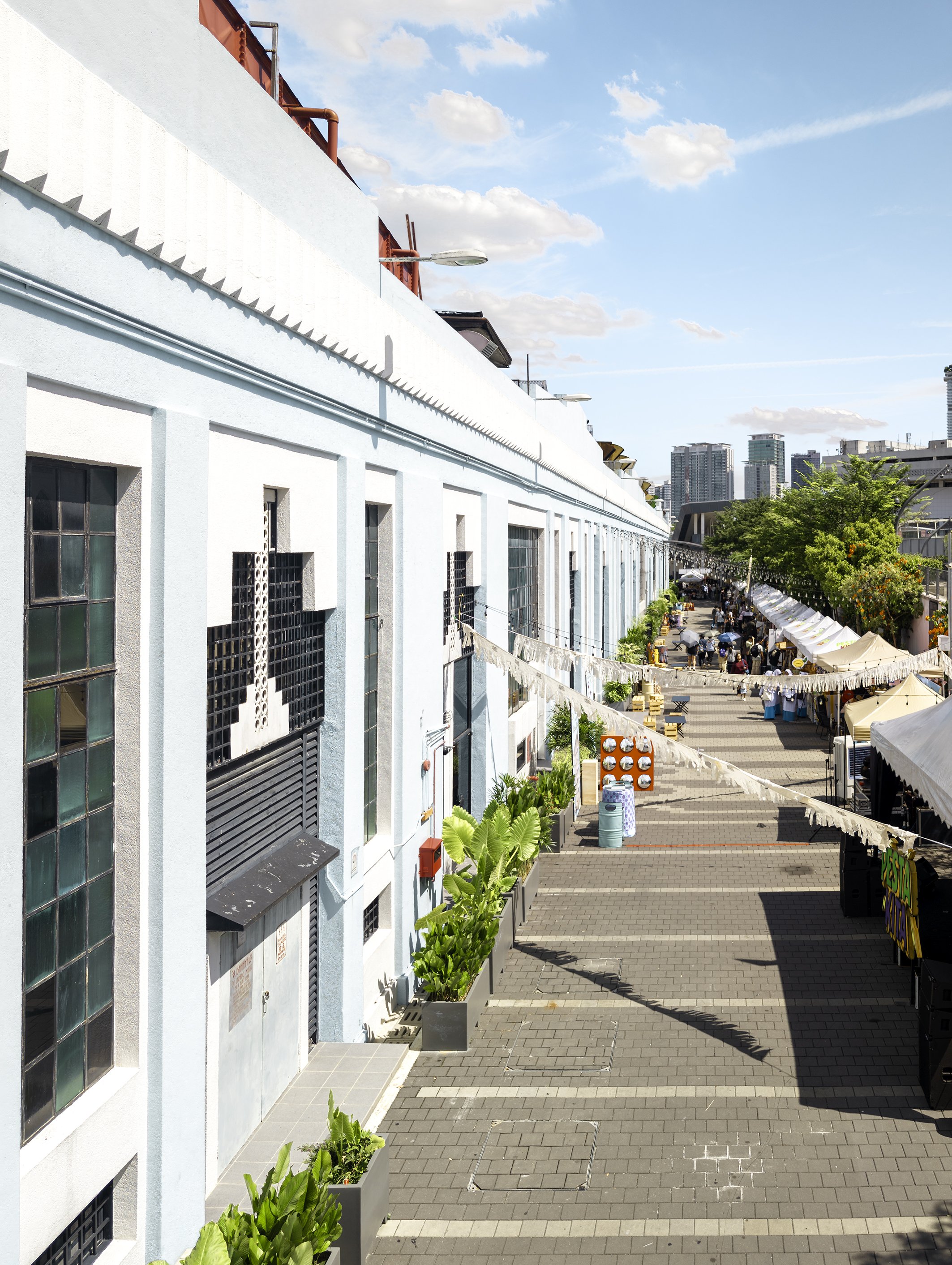
Bartolo Lisboa Bakehouse is a Portuguese bakery-café run by Lisbon-born cousins. It opened in late 2023 on the mezzanine of Kuala Lumpur's Central Market – the latter, itself, a quite remarkable 19th-century market hall heritage building with an overlay of 1930s Art Deco. The cafe uses recipes passed down by the founder's mother and grandmother.
How much, and how many?
RM 8 each, at time of writing – or roughly two Australian dollars. When I ordered one, the manager told me I'd want more. She was right. Don’t be me. Order more.
Is Bartolo at the Central Market the only place in KL to find these incredible tarts?
Bartolo also runs a takeaway kiosk, Nata House, at Bangsar Shopping Centre.
What if I can't eat it straight away?
Humidity is the enemy of the pastel de nata; the magic fades within hours. The fix – or best re-heating practice – is 90 seconds in a hot oven or air fryer, set at around 200°C. Whatever you do: don’t microwave them; this is the food equivalent of a stake to the heart – from which, nothing recovers.
—
Campbell Mattinson paid his own way, bought his own food, returned of his own volition, and had his wife and daughter as witnesses.